When Should You Stop Trying to Remove Roof Moss Yourself?
Clearing a bit of moss yourself can feel like a reasonable Saturday job. A ladder, a brush, a couple of hours, and the roof looks better. The trouble is that roof moss removal has a way of escalating, from a bit of edge-clearing to leaning off a ladder, to stepping onto the tiles, to reaching for a pressure washer, and each step up adds risk to both you and the roof. Knowing where to stop is what keeps a sensible bit of maintenance from turning into an accident or an expensive mistake.
This guide sets out the clear limits of safe DIY moss removal, the signs a job has gone beyond what you should tackle yourself, and when calling in a professional is the wiser call.
The Hard Limit: Getting Onto the Roof
The single clearest line is this: do not climb onto the roof to remove moss. It is where most of the danger lies, and it is the point where a DIY job should stop.
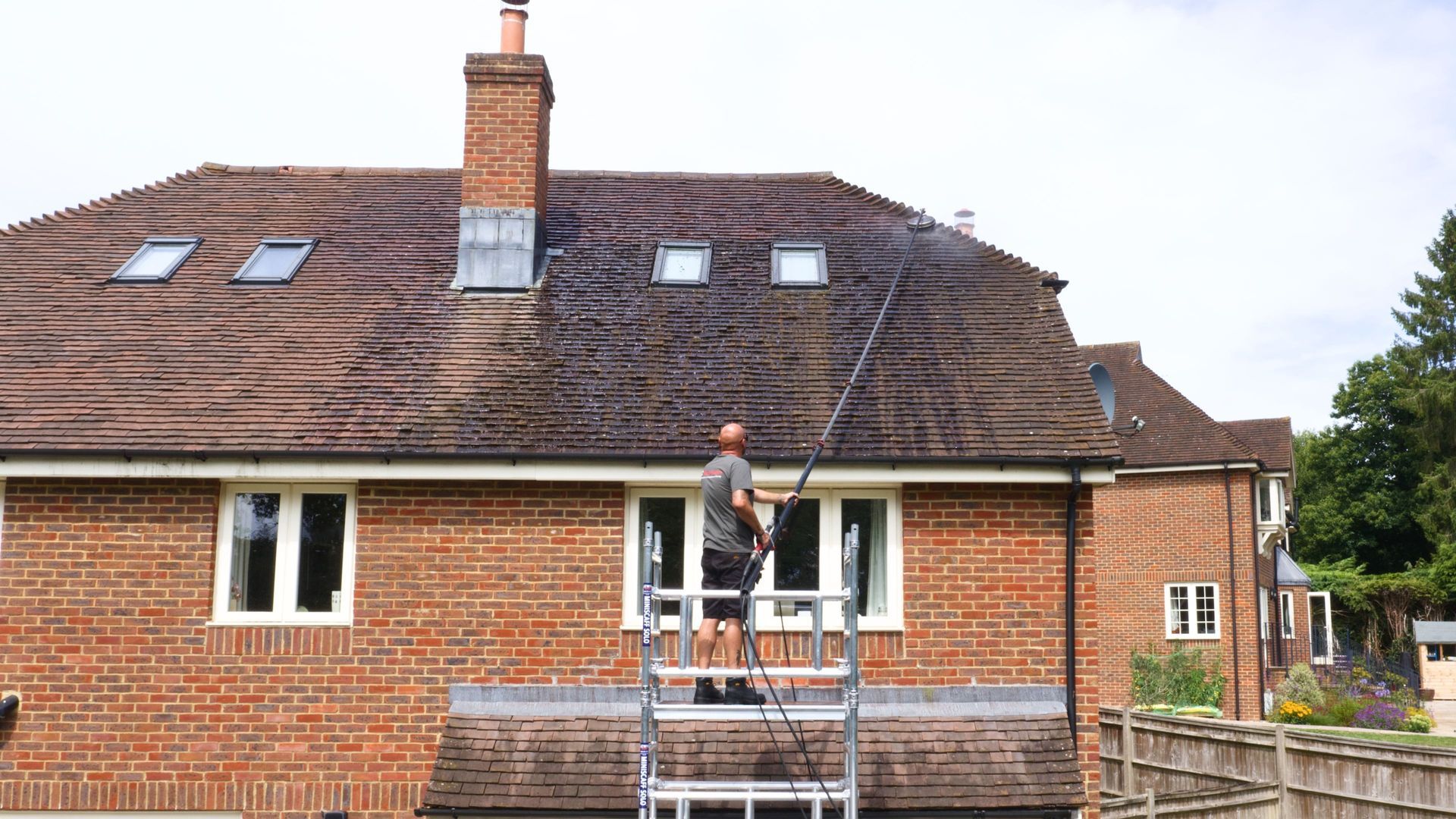
Roof tiles covered in moss are slippery, and moss-weakened tiles can crack or give way underfoot. A pitched roof offers little to hold on to, and a fall from roof height can cause serious injury. Professionals avoid this risk precisely by not standing on the roof, using no-contact methods that work from mobile scaffold towers or ground level instead. If clearing your moss requires you to get onto the tiles, that is the signal to stop and hand it over, not to press on carefully.
Working from a ladder to clear the very lowest edge is a lesser risk, but even that has limits, and overreaching from a ladder is a common cause of falls. The moment the job pulls you higher or onto the slope itself, the safe DIY window has closed.
The Signs a DIY Job Has Gone Too Far
Beyond the roof-access line, several signs indicate a moss problem has outgrown a do-it-yourself approach.
Heavy, established growth. Thick moss across whole slopes, packed into the joints, is a large job that usually needs proper access and equipment to clear safely and thoroughly, not a brush and a ladder.
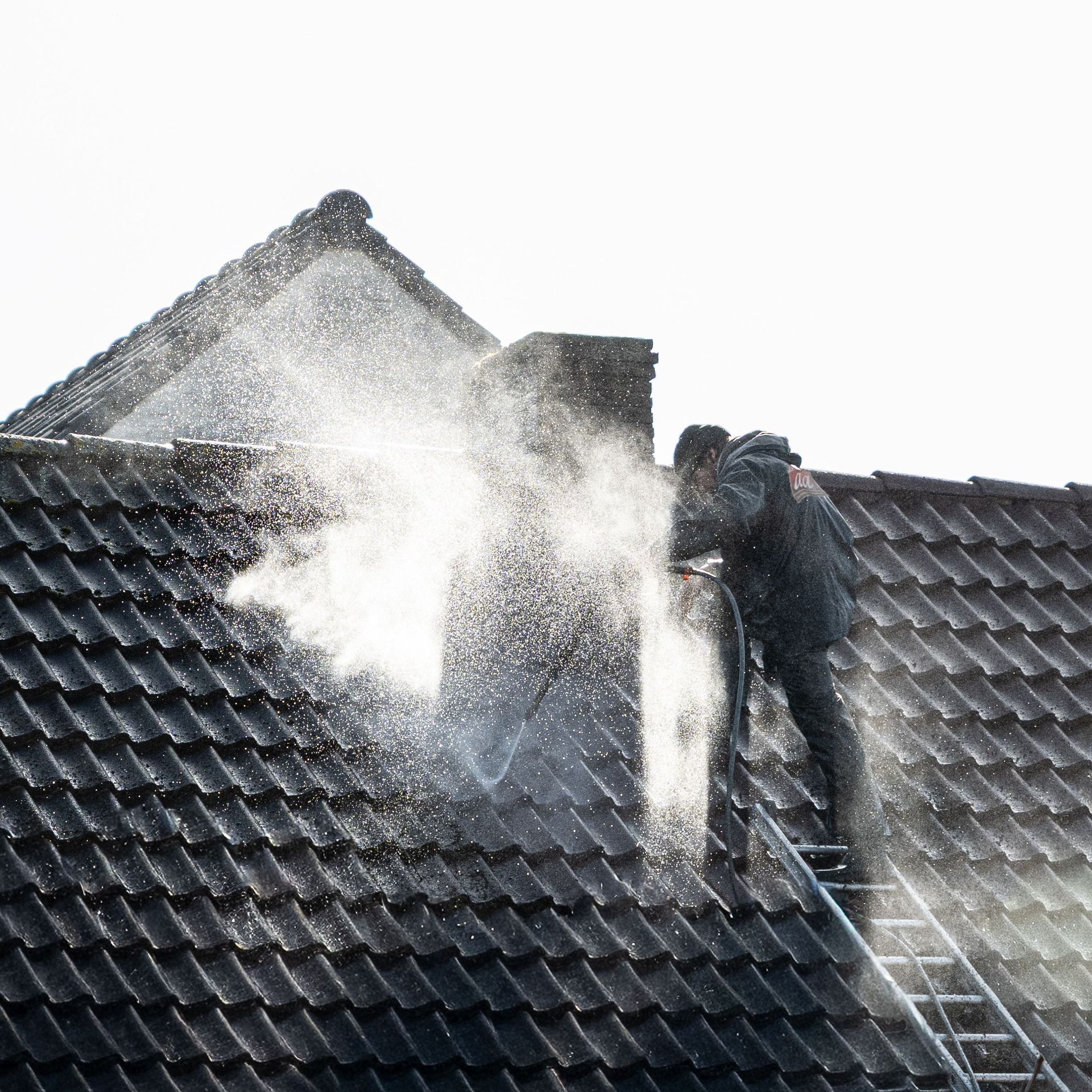
You are reaching for aggressive tools. If clearing the moss seems to need a pressure washer or a wire brush, stop. Both damage tiles, stripping coatings, scratching surfaces, forcing water inside, and they often make regrowth worse. This is a job for gentle, no-contact methods.
Cracked or slipped tiles. If you find damaged tiles while clearing moss, the roof needs repair as well as cleaning, which is beyond routine DIY and calls for a professional assessment.
Signs of leaks or loft damp. Any hint that water has been getting in, damp patches inside, staining on loft timbers, means the situation is about roof integrity, not just surface moss, and should be inspected.
Steep or high roofs, or difficult access. A steep pitch, a tall property, or awkward access over extensions and conservatories all push a job well beyond safe DIY territory.
Warning: More people are injured each year in falls from ladders and roofs during home maintenance than most realise. No amount of moss is worth a fall from height. If there is any doubt about whether a moss job is safe to do yourself, that doubt is the answer, and it is telling you to stop.
Why Professional Methods Are Safer for the Roof Too
Stopping DIY is not only about personal safety; it is often better for the roof. The tools a homeowner is most likely to reach for, a pressure washer or a stiff brush, are exactly the ones that damage tiles. Aggressive removal strips the protective coating, roughens the surface so moss returns faster, and can force water beneath the tiles or crack weakened ones.
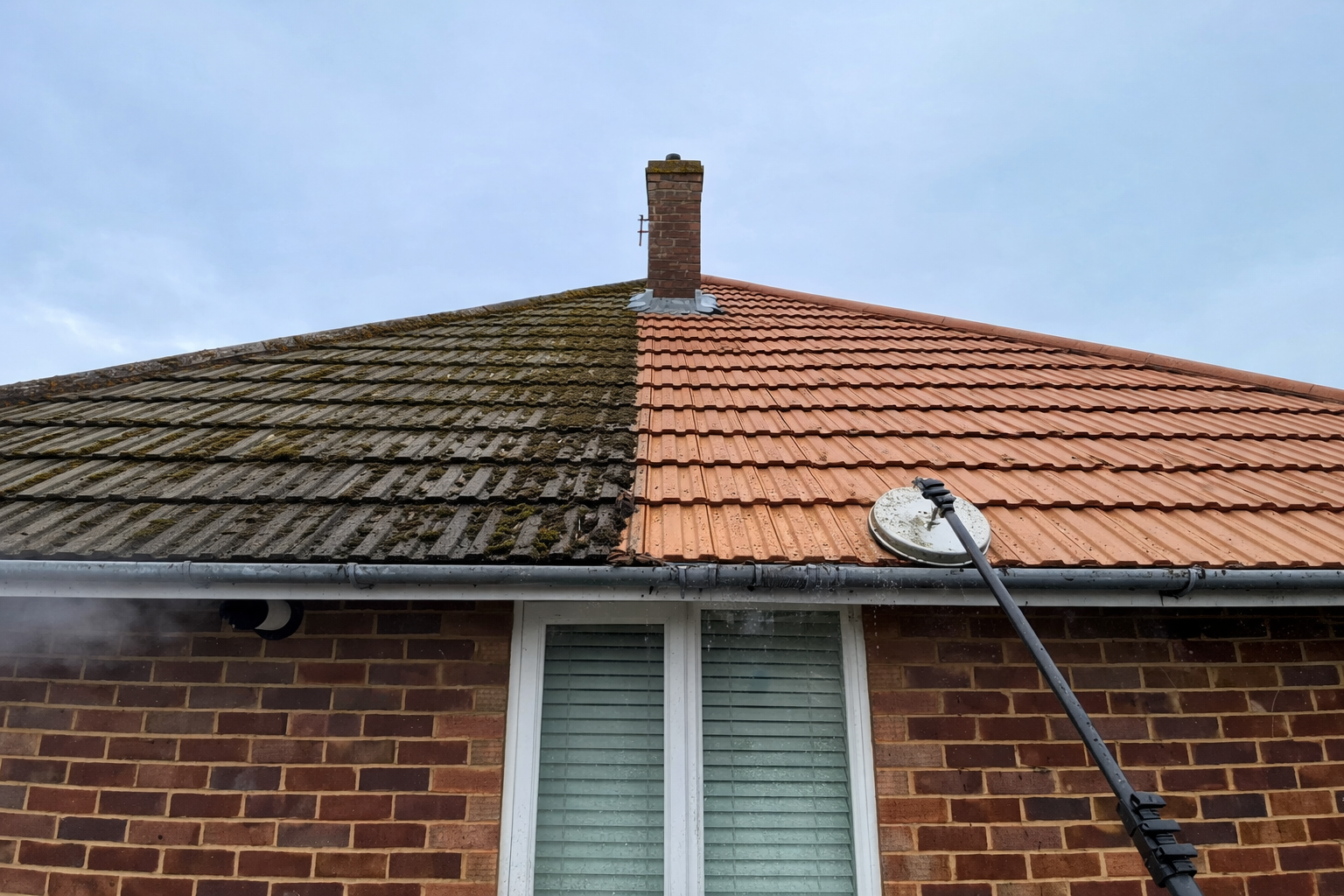
A no-contact professional clean avoids all of this, lifting the moss gently without abrading the tile or blasting water under the laps, and following up with a non-toxic biocide that slows regrowth. The roof is inspected and patch-tested first so the method suits the tiles. A gentle Roof Cleaning done this way removes the moss without the collateral damage that well-meaning DIY often causes. Clearing the Gutter Cleaning at the same time removes debris that feeds regrowth, another job made safer with the right access equipment.
What You Can Safely Do Yourself
There is still a place for the homeowner in keeping moss down, as long as it stays off the roof. You can watch the shaded slopes for early growth from the ground, keep an eye on the gutters, cut back overhanging branches from a safe position to let in light and air, and note any cracked tiles or staining to report at an inspection. These low-risk actions genuinely help, slowing growth and catching problems early, without ever putting you on the tiles.
The dividing line is simple: monitoring, planning, and ground-level care are fine; climbing onto the roof and using aggressive tools are not. In our 15 years on Sussex roofs, the safest and best-kept roofs belong to owners who watch from the ground and leave the working-at-height cleaning to no-contact methods.
You should stop trying to remove roof moss yourself the moment the job involves climbing onto the roof, working on a steep or high slope, using pressure washers or wire brushes, or dealing with heavy, established growth, cracked tiles, or signs of leaks. Working at height on slippery, mossy tiles is genuinely dangerous, and aggressive DIY methods often damage the roof. At that point a no-contact professional clean is the safer choice.
Frequently Asked Questions
Is it ever safe to remove roof moss myself?
Ground-level and low-risk tasks are fine: watching for early growth, keeping an eye on gutters, and cutting back branches from a safe position. What is not safe is climbing onto the roof, working on a steep or high slope, or overreaching from a ladder. Moss-covered tiles are slippery and can crack underfoot, so any job that puts you on the roof should be left to professionals using no-contact methods.
Why shouldn't I just use a pressure washer myself?
Because pressure washing a roof damages it and is dangerous to do. High pressure strips the tile coating, forces water under the tiles toward the timber, and can dislodge mortar, while the job usually means standing on slippery tiles handling a powerful lance. It also does nothing to slow regrowth. A gentle, no-contact clean removes the moss without those risks to you or the roof.
What if I have already started and found cracked tiles?
Stop and arrange an inspection. Cracked or slipped tiles mean the roof needs repair as well as cleaning, and continuing to work around them yourself risks making the damage worse or causing a leak. A professional can assess the tiles, carry out any repairs, and clean the roof safely, giving you a sound, watertight result rather than a patchy DIY one.
How do I know if my roof is too steep or high to tackle myself?
As a rule, if reaching the moss needs you to climb onto the tiles, use a tall ladder, or work on a noticeably steep pitch, it is beyond safe DIY. Two-storey properties, steep roofs, and homes with awkward access over extensions or conservatories all fall into professional territory. If you are unsure, treat that uncertainty as a no and get a quote instead.
Will a professional clean cost much more than doing it myself?
Doing it yourself can look cheaper until you factor in the cost of equipment, the risk of tile damage from aggressive methods, and above all the danger of working at height. A professional no-contact clean protects the roof and removes the safety risk, and with biocide aftercare it lasts longer than a quick DIY scrape. A free quote will show you the real cost for your roof.
Leave the risky part to us — Book a no-contact professional clean instead of climbing onto a slippery roof. Ben's Roof Cleaning removes moss safely from towers or the ground, with a free inspection. Call 0147 335 3923.
Knowing When to Step Back
The right time to stop removing roof moss yourself is the moment the job asks you to climb onto the roof, use a pressure washer or wire brush, or deal with heavy growth, cracked tiles, or signs of a leak. Those are the points where the risk to you and the damage to the roof both climb sharply. Plenty of useful moss control can be done safely from the ground, watching, planning, cutting back branches, but the working-at-height cleaning belongs with no-contact professional methods. No roof clean is worth a fall, and no tile is improved by being blasted or scraped, so knowing when to step back protects both you and your roof.